The revival of bare-knuckle boxing: is this early form of pugilism actually more dangerous than modern boxing?

Boxing is a sport with a clear objective: to hit and not get hit. Despite all the rules and regulations that have been conceived for safety purposes over time, boxing will always be a hurting business at the end of the day. The sweet science is unique from all other contact sports, like hockey and football, in that the damage inflicted on your opponent is deliberate [1].

Continue ReadingThe revival of bare-knuckle boxing: is this early form of pugilism actually more dangerous than modern boxing?

Gros plan sur les projets de la JSEMS (Junior Sports and Exercise Medicine Switzerland)

L’année 2020 s’est montrée rude pour la JSEMS, avec l’annulation de la Students Day 2020 et les difficultés du comité, venant de la Suisse entière, à se réunir. Nous avons dû faire preuve de créativité pour prouver aux étudiant.e.s de médecine que malgré les difficultés, nous sommes toujours présents.

Continue ReadingGros plan sur les projets de la JSEMS (Junior Sports and Exercise Medicine Switzerland)

Resistance Training Enhances Renal Function in Experimental Renal Ischemia-Reperfusion

Acute kidney injury (AKI) resulting from ischemia-reperfusion injury (IRI) is among the most common complications in hospitalized patients. In recent years, it has been argued that exercise is an approach to attenuate impairments caused by AKI.

Continue ReadingResistance Training Enhances Renal Function in Experimental Renal Ischemia-Reperfusion

Effects of two endurance training protocols (High ­Intensity Interval Training = HIIT versus Polarized Training = POL) on endurance capacity, heart rate at rest and heart rate variability (HRV) in young sport students

The goal of the present study was the analysis of the effects of two endurance training interventions (HIIT versus POL) over a period of 5 weeks on 16/17 year old sport major students. The study was integrated in regular P.E. lessons. In addition to the training load, daily changes of easily measurable cardiologic parameters were monitored in order to assess their validity in predicting endurance performance. The students conducted 12 training sessions in two groups. With pre- and post-tests the endurance capacity was determined via Luc Léger’s shuttle run test.

Continue ReadingEffects of two endurance training protocols (High ­Intensity Interval Training = HIIT versus Polarized Training = POL) on endurance capacity, heart rate at rest and heart rate variability (HRV) in young sport students

Barbell strength training for non-specific low back pain rehabilitation: a prospective case series

Non-specific low back pain is considered a widespread disease and therefore leads to a high financial burden on the health care system. Among other things, reduced muscle strength of the trunk extensors is discussed as major risk factor. Therefore, the aim of the study was to examine the influence of a barbell training on the strength capacity of the trunk muscles and on the pain-related restrictions in the everyday life of low back pain patients.

Continue ReadingBarbell strength training for non-specific low back pain rehabilitation: a prospective case series

Chronic Exertional Compartment Syndrome in ­Athletes: A narrative Review

Chronic exertional compartment syndrome of the lower leg accounts for approximately 75% of sports-related chronic leg pain. Nevertheless, the exact and timely recognition in athletes might pose a great challenge to sports physicians. Among a variety of possible differential diagnoses such as tenosynovitis, stress fractures, periostalgia, or popliteal artery entrapment syndrome the physician has to be able to identify the correct entity as promptly as possible.

Continue ReadingChronic Exertional Compartment Syndrome in ­Athletes: A narrative Review

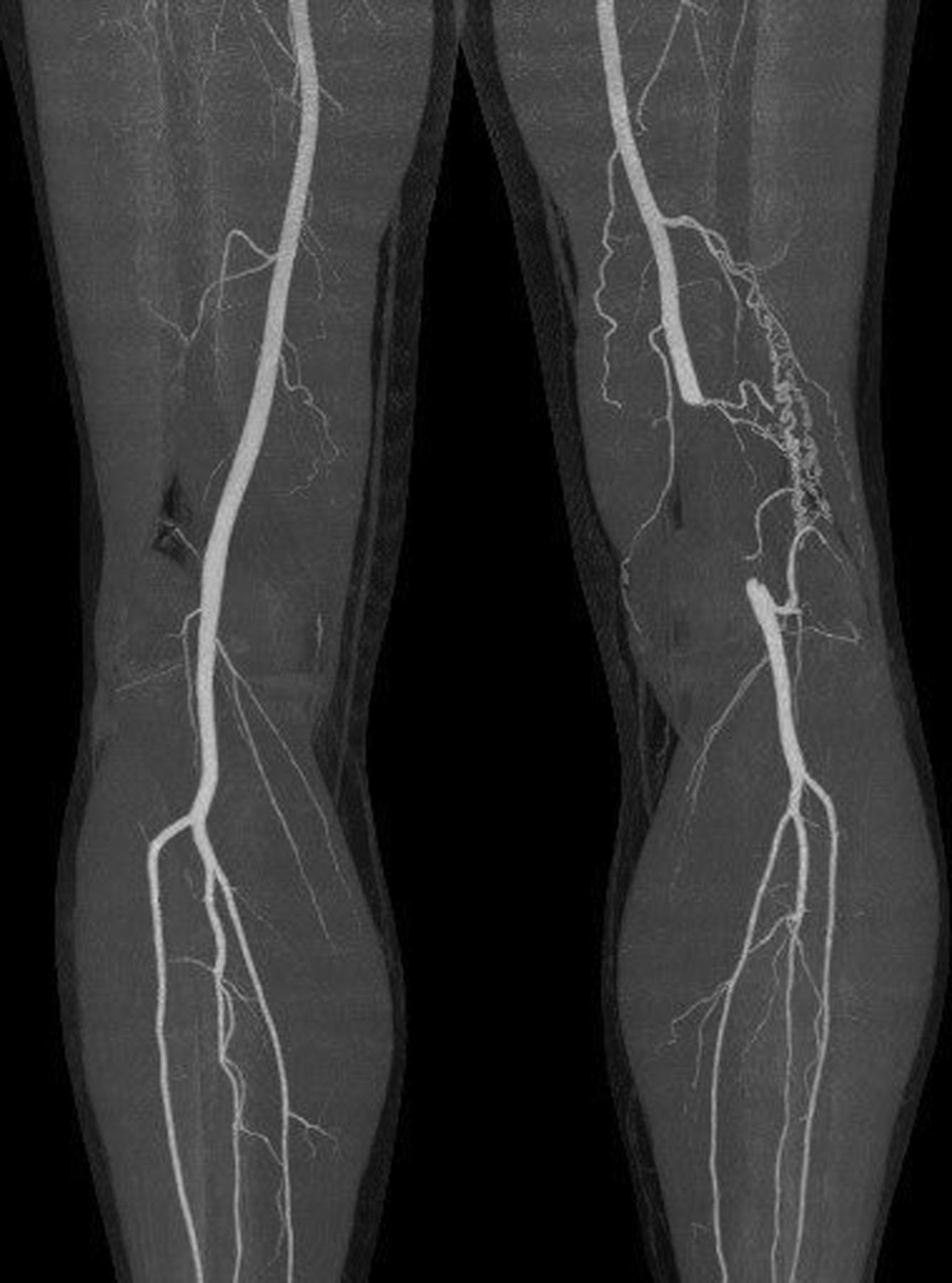
Exercise induced Leg Pain due to Vascular Compression Syndrome

Within a sports medicine setting vascular pathologies of the legs represent a rare entity and are often associated with a significant delay of diagnosis and treatment. Nevertheless, timely detection is crucial when it comes to management of athletes.

Continue ReadingExercise induced Leg Pain due to Vascular Compression Syndrome